The Institutional History of Daoyuan (道院)
Daoyuan (道院) was a major new religious organization of the Republican period, emerging around 1921 in Jinan (濟南), Shandong province. Its name might suggest an ordinary Daoist temple, but its actual configuration was more complex: it was a modern civic association that combined moral teaching, charitable relief, spirit-writing (扶乩, fuji), publishing, and a network of local branches. To understand Daoyuan's significance, it helps to see it within the broader landscape of Republican-era "redemptive societies" (救世團體). According to David A. Palmer's 2011 survey, more than a dozen such organizations emerged between the 1910s and 1940s — including the Tongshanshe (同善社, 1917), Wushanshe (悟善社, 1919), Wanguo Daodehui (萬國道德會, 1921), Yiguandao (一貫道, 1947), and the Vietnamese Cao Dai (1926) — and by the mid-twentieth century they collectively claimed some 13 million followers, a figure that exceeded the combined membership of all Buddhist monastics, Protestants, and Catholics in China at the time.
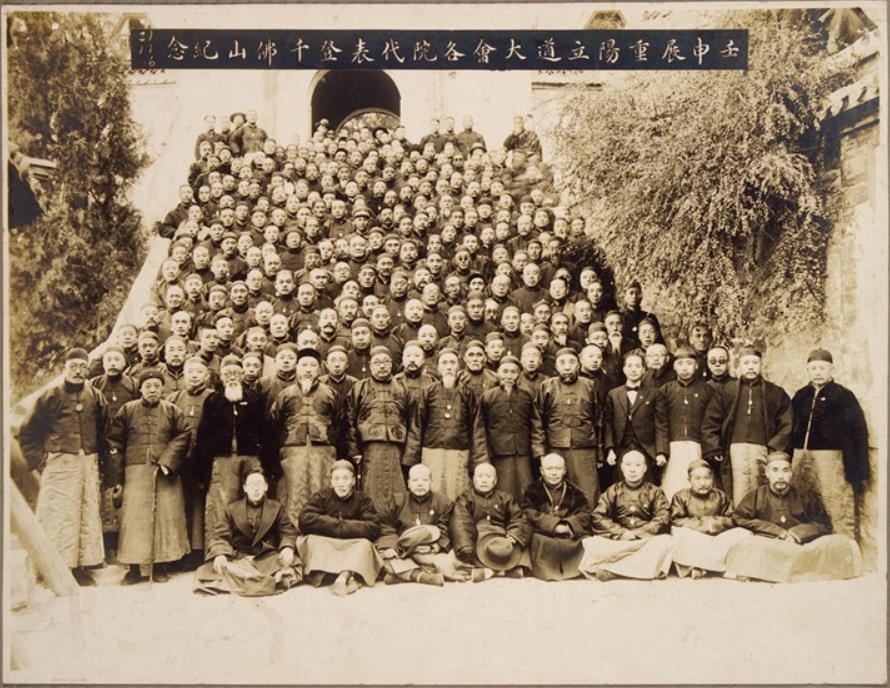
1921: Beginning in Jinan
The text Daoyuan Huowen (道院或問, "Questions and Answers about Daoyuan"), a catechism published by the Jinan Daoyuan in 1927, states the founding date clearly: established in Jinan in the second month of the Xinyou year (辛酉), with official registration at the Ministry of the Interior (內務部立案). Converted to the Gregorian calendar, that is March 1921. The earliest record gives the address "No. 11, Shangxin Street, Jinan" (濟南上新街門牌十一號). Soon after, locations appear in Tianjin (天津), Jingzhao (京兆, Beijing), and Jining (濟寧). By 1927, the organization had established at least 163 branches spanning from Shandong to Zhili, Jiangsu, Anhui, Henan, Hubei, Zhejiang, Shanxi, Fengtian, Jilin, Heilongjiang, Sichuan, Shaanxi, Guizhou, Suiyuan, and Rehe — and even one in Kobe, Japan (神戶), managed by a Japanese member named Deguchi Jinjin (出口尋仁), founded in 1924.
This shows that Daoyuan was never simply a private altar. From the outset it entered the organizational world of modern China — registration, branch associations, regulations, periodicals, and public activities. It joined traditional spirit-writing to the institutional apparatus of a modern civic society. Palmer identifies four criteria that distinguished redemptive societies from older religious forms: they drew on the Three Teachings without being affiliated to orthodox institutions; they were based on voluntary membership; they formed nationally or provincially registered associations; and they were established between 1912 and 1949. Daoyuan fits all four precisely.
What Kind of "Dao" Did Daoyuan Teach?
The "Dao" (道) of Daoyuan is not simply Daoism in the narrow sense. According to Daoyuan Huowen, Daoyuan practiced inner cultivation through quiet sitting (jingzuo, 靜坐) and outer cultivation through charitable enterprises (慈善事業). It worshipped Zhisheng Xiantian Laozu (至聖先天老祖), described as "the ancestor of heaven and earth and all things, the root of the Great Dao" (天地萬有之始祖,大道的根源), alongside the founders of the five religions — Confucius, the Buddha, Laozi, Jesus, and Mohammed. Daoyuan stressed that the Five Teachings share a single source (五教同源, wujiao tongyuan): although Confucianism, Buddhism, Daoism, Christianity, and Islam differ in outward form, they can all be traced back to a common moral foundation. Significantly, the organization maintained five "special study departments" (五教特部), one for each religion, and did not require members to abandon their original religious affiliation — it explicitly stated that it united the teachings but did not establish a new religion.
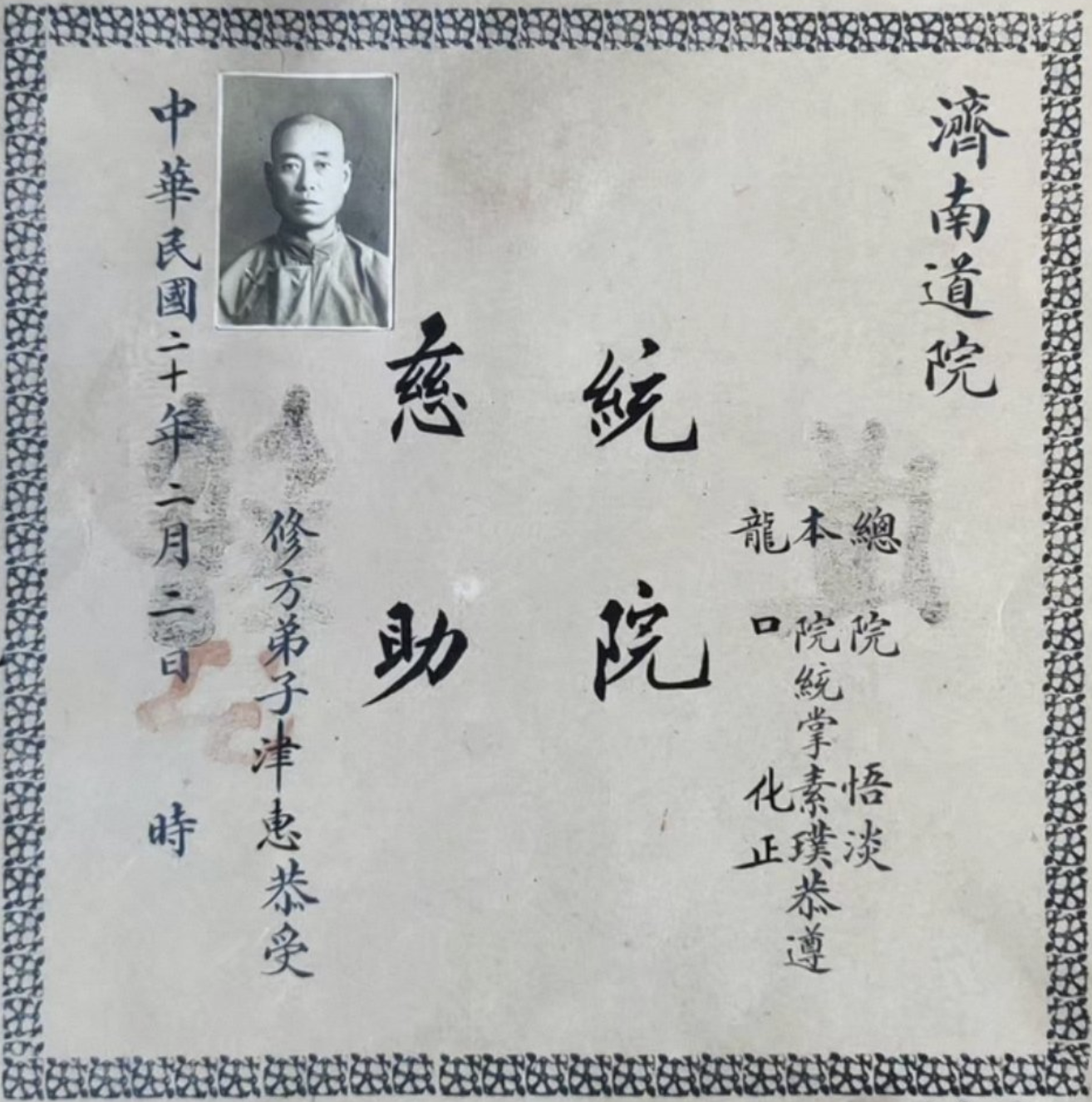
This claim carried considerable practical weight in the early Republic. After religious freedom entered political discourse, many religious and charitable organizations began to operate publicly. At the same time, Chinese society faced warfare, regional fragmentation, ideological radicalization, and the stigmatization of "superstition." Daoyuan positioned itself as an organization capable of bridging tradition and modernity: it preserved spirit-writing, altar instructions, and sacred authority while also adopting the modern vocabulary of "research" (研究), "learned society" (學會), "charity" (慈善), and "official registration" (立案). Its members were called xiufang (修方, "cultivators"), not daoyou (道友, "Dao friends") as one might expect — a terminological choice that signaled institutional seriousness.
Daoyuan also produced its own scriptures through fuji, notably the Taiyi Beiji Zhenjing (太乙北極真經) and Taiyi Zhengjing Wuji (太乙正經午集). In the broader history of Daoism, Palmer observes that redemptive societies like Daoyuan and Tongshanshe were, in effect, the chief propagators of neidan (內丹) meditation methods in the Republican period — a role often overlooked in conventional narratives of modern Daoism.
How the Organization Expanded
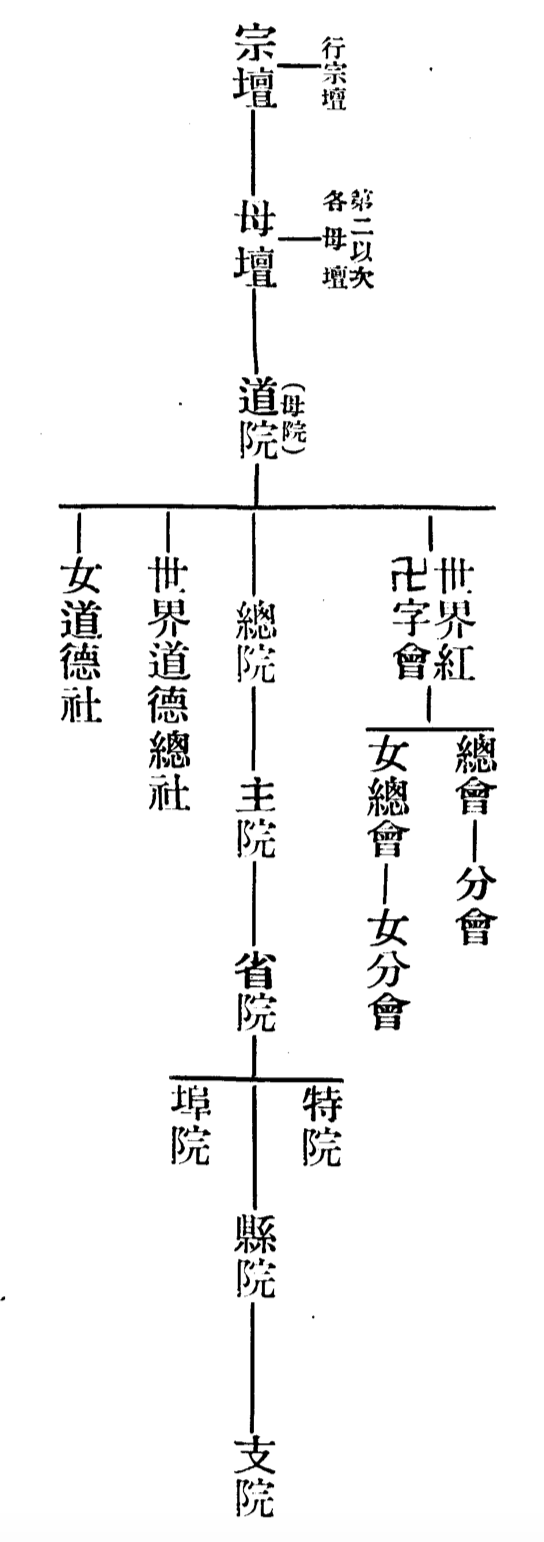
Daoyuan expanded rapidly. The branch data records a large number of locations between 1921 and 1928, including Jinan, Tianjin, Jingzhao, Jining, Shanghai, Jiangning (江寧), Hangzhou (杭州), Baoding (保定), Wuchang (武昌), and beyond. This expansion should not be understood merely as "more followers." More precisely, Daoyuan built a composite institutional apparatus: internally, it maintained spirit altars, self-cultivation, divine instructions, and research; externally, it operated charity, disaster relief, publishing, and local branches. Members were connected through membership registers, conferences, periodicals, and the branch network. It also had a formal ethical code — the Ten Precepts (十誡) — and a female branch, the Nü Daodeshe (女道德社), which reinterpreted the traditional "Three Obediences and Four Virtues" (三从四德) in a more progressive direction.
Daoyuan and the World Red Swastika Society
To understand Daoyuan, one must also understand the World Red Swastika Society (世界紅卍字會). Daoyuan's internal materials often describe their relationship as "the Yuan as substance, the Hui as function" (院為體,會為用, yuan wei ti, hui wei yong): Daoyuan leaned toward inner cultivation and religious organization, while the Red Swastika Society leaned toward external charity and social service. Put differently, Daoyuan supplied the religious and moral framework, and the Red Swastika Society translated that framework into public action — disaster relief, medical aid, shelters, and local welfare.
This dual structure suited Republican society well. A religious organization that spoke only of mystical experience risked being criticized as superstition; if it could conduct charity, disaster relief, and organized public service, it stood a far better chance of gaining social acceptance. Li Guangwei documents how Daoyuan used fuji to mobilize charitable giving during crises: during the 1929 Northwest China famine, deities exhorted members through spirit-writing "like parents urging their children," positioning donations not merely as social obligation but as a direct response to sacred instruction.
Pressure after 1928
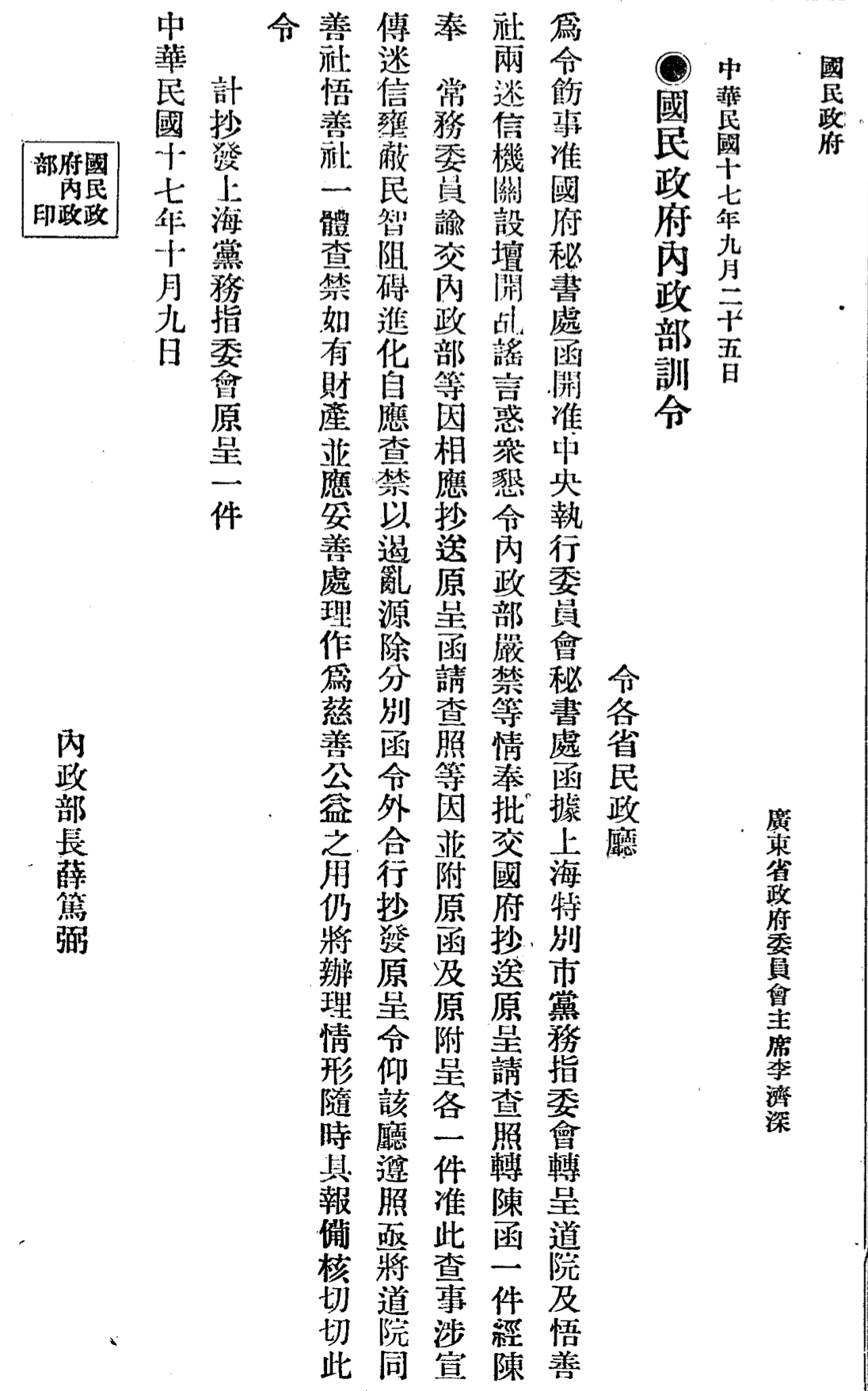
Daoyuan's development did not proceed without obstacles. After the establishment of the Nanjing Nationalist Government (南京國民政府), regulation of religious associations, sectarian groups (會道門), and so-called superstitious activities became stricter. Around 1928, Daoyuan faced formal suppression. This did not mean Daoyuan disappeared overnight — branches continued to operate, and spirit-writing continued in some locations into the 1930s and beyond — but its public activities, organizational identity, and modes of propagation were all affected.
The longer arc of the twentieth century was still more challenging. After 1949, the new government classified redemptive societies as "reactionary sects" (反動會道門) and systematically suppressed them. According to Palmer, police reports tallied some 820,000 arrests of redemptive society leaders in the early PRC period. Daoyuan's mainland operations were effectively terminated. Branches continued in Hong Kong, Taiwan, and diaspora communities, where spirit-writing practices persist to the present day — the phoenix halls (鸞堂) of Taiwan are their most visible modern descendants.
Why Study Daoyuan Today
Daoyuan is not a single-subject topic. It belongs simultaneously to the history of religion, the history of publishing, the history of charity, the history of urban networks, and the political culture of Republican China. Its materials include spirit-writing texts, organizational regulations, branch directories, membership certificates, periodicals, divine instructions, and charitable records. And it is not an isolated case: it belongs to a family of redemptive societies that collectively constituted one of the largest organized religious movements of twentieth-century China — a movement that, as Palmer notes, scholarship on modern Chinese religion is only beginning to take seriously.
The archive presented here gathers Daoyuan's surviving texts so that readers can trace a single organization through its multiple dimensions: how it expanded from a single street address in Jinan to an international network in under a decade, how it transformed altar texts into printed publications, how it built a charitable apparatus that rivaled state relief efforts, and how it negotiated the boundary between religion and superstition in a period when that boundary was being violently redrawn.