The History of Fuji (扶乩)
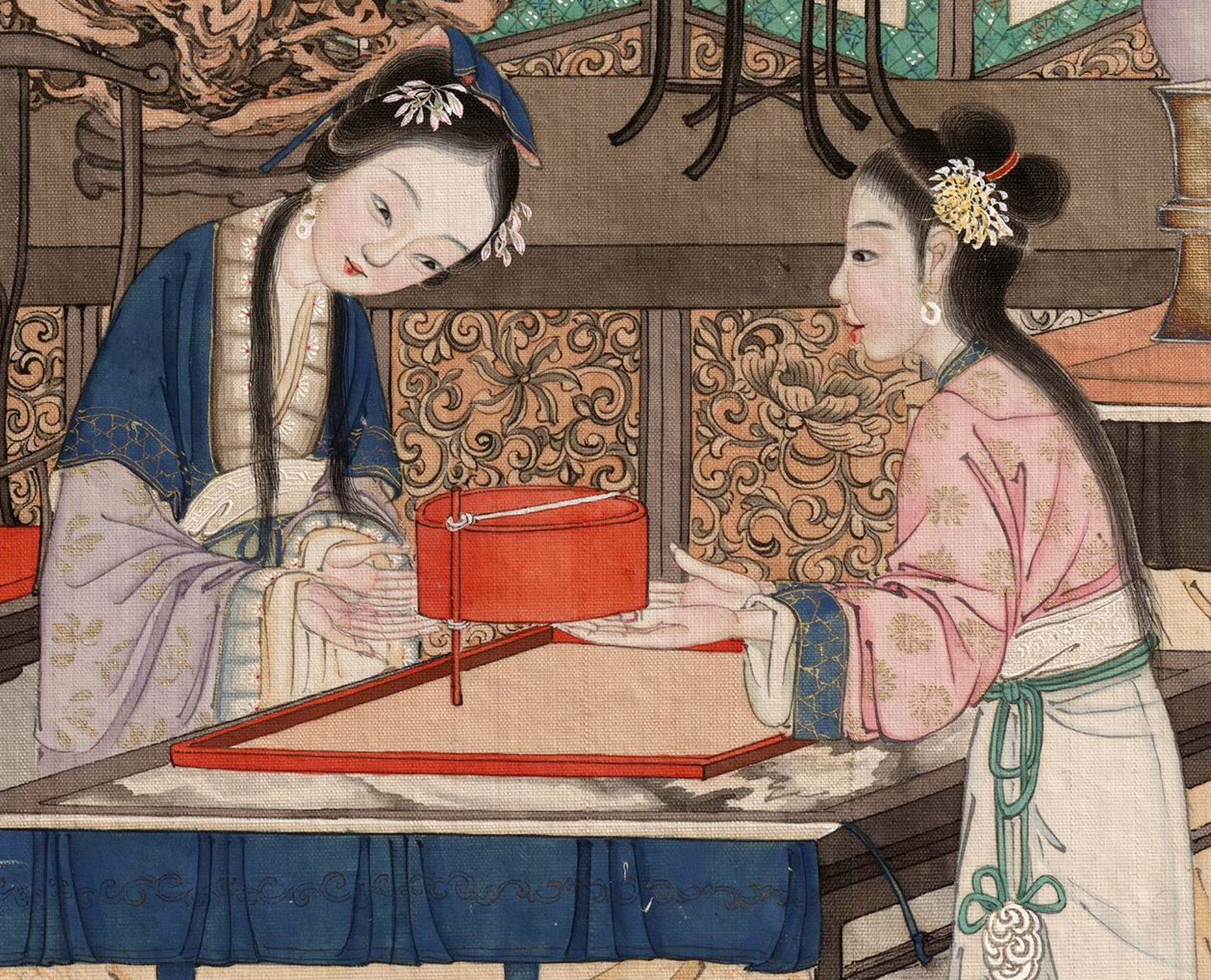
Fuji (扶乩), also written as 扶箕 or 扶鸾 (fuluan, "supporting the phoenix"), is commonly translated as "spirit-writing," but that rendering loses a great deal of detail. It is not simply about "writing": it is a practice that establishes connections among deities, human participants, instruments, ritual procedures, and texts. A typical fuji altar (乩壇, jitan) involves inviting a deity, burning incense, preparing talismanic paper (符紙), setting up a sand tray or sheet of paper, and assigning roles — the stylus operator, the character-caller who reads each character aloud, and the scribe who records them. The text that remains might be a line of moral exhortation, a full divine instruction, a poem, an image, or eventually an entire compiled book.
The practice has deep roots. According to the pioneering 1942 study by Chao Wei-pang, fuji traces its origins to the cult of Zigu (紫姑), a concubine who, according to the fifth-century text Yiyuan (異苑), died of grief on the fifteenth day of the first lunar month. Her spirit was originally invited through a sieve (箕) or broom (帚) — instruments associated with women's domestic labor — in rituals that merged divination with commemoration of the dead. Chao demonstrates that this practice has striking parallels to sieve divination traditions across Eurasia, from Greek coskinomancy to Indian, Scottish, and Germanic folk rituals, suggesting that the magical power of the sieve as a divination tool may have deep, cross-cultural roots.
From "Ji" (箕) to "Qi" (乩)
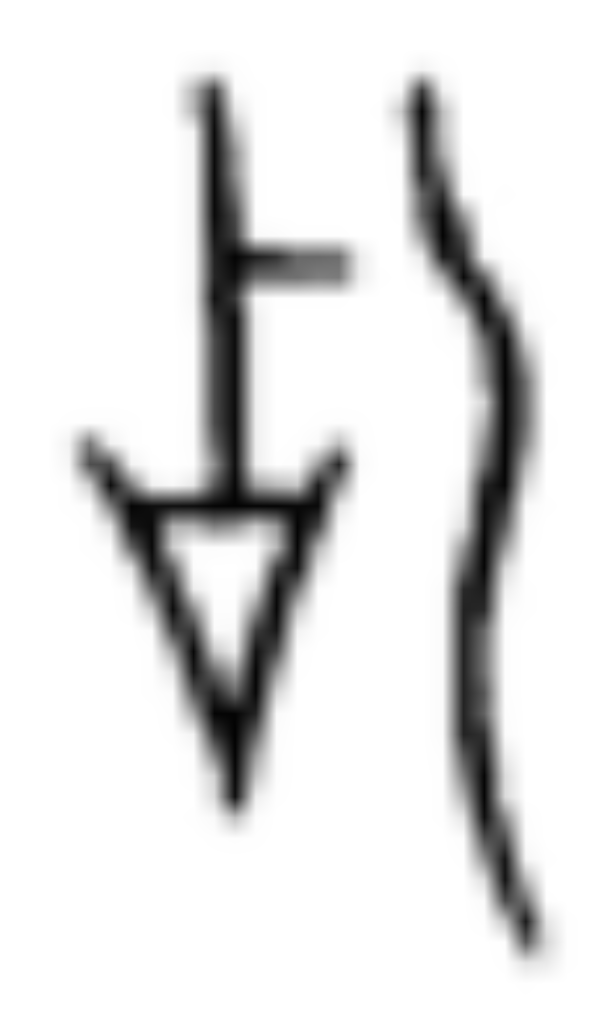
The term fuji itself preserves the history of the instrument. Earlier terminology was closely tied to the ji (箕), a bamboo utensil used for sifting grain. According to traditional accounts, a short stylus was attached to a winnowing basket, which was held by two people so that it could trace characters across sand or ash. By the end of the Southern Song dynasty, the practice had transformed: what was once "invitation of Zigu" evolved into "invitation of the great immortal" (請大仙), then to "sieve divination" (箕卜), and finally to "fuji" (扶箕). The first datable appearance of the term fuji occurs in the miscellany Chuogeng lu (輟耕錄), printed in 1366.
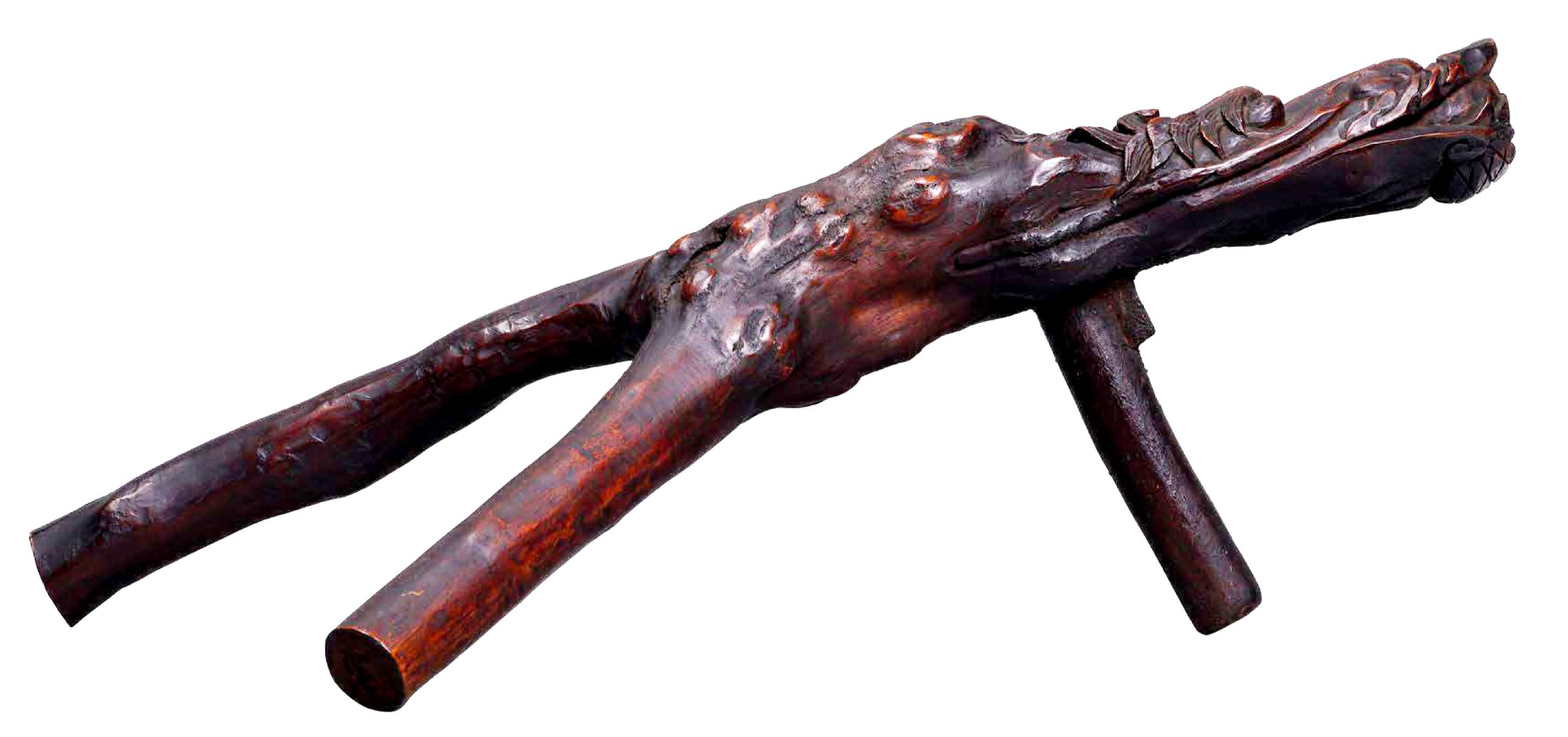
Over time, the basket was replaced by purpose-built wooden instruments, and the name gradually shifted from fuji (扶箕) to fuji (扶乩) and other variants. Modern readers sometimes associate it with the planchette of Western spiritualism, but the two should not be equated. Chinese instruments commonly take a T-shape or a Y-shape. The T-shaped variety tends to be simpler; the Y-shaped version often features a dragon head or phoenix head carved at the intersection — hence the alternative name luanbi (鸞筆, "phoenix stylus"). The phoenix here is not an ornamental motif: it is a symbol of transmission, marking the passage of divine words through the instrument, the human body, and the written characters into the human world. Surviving museum specimens, such as the red-painted Y-shaped phoenix stylus from Bisia Temple (碧霞宮) in Yilan, Taiwan (post-1945, dedicated to the martial deity Yue Fei 岳飛), and an unpainted Y-shaped stylus from Kaohsiung designed for two mediums (Japanese occupation period, 1895–1945), show the variety of forms these instruments took.
How the Ritual Produces Text
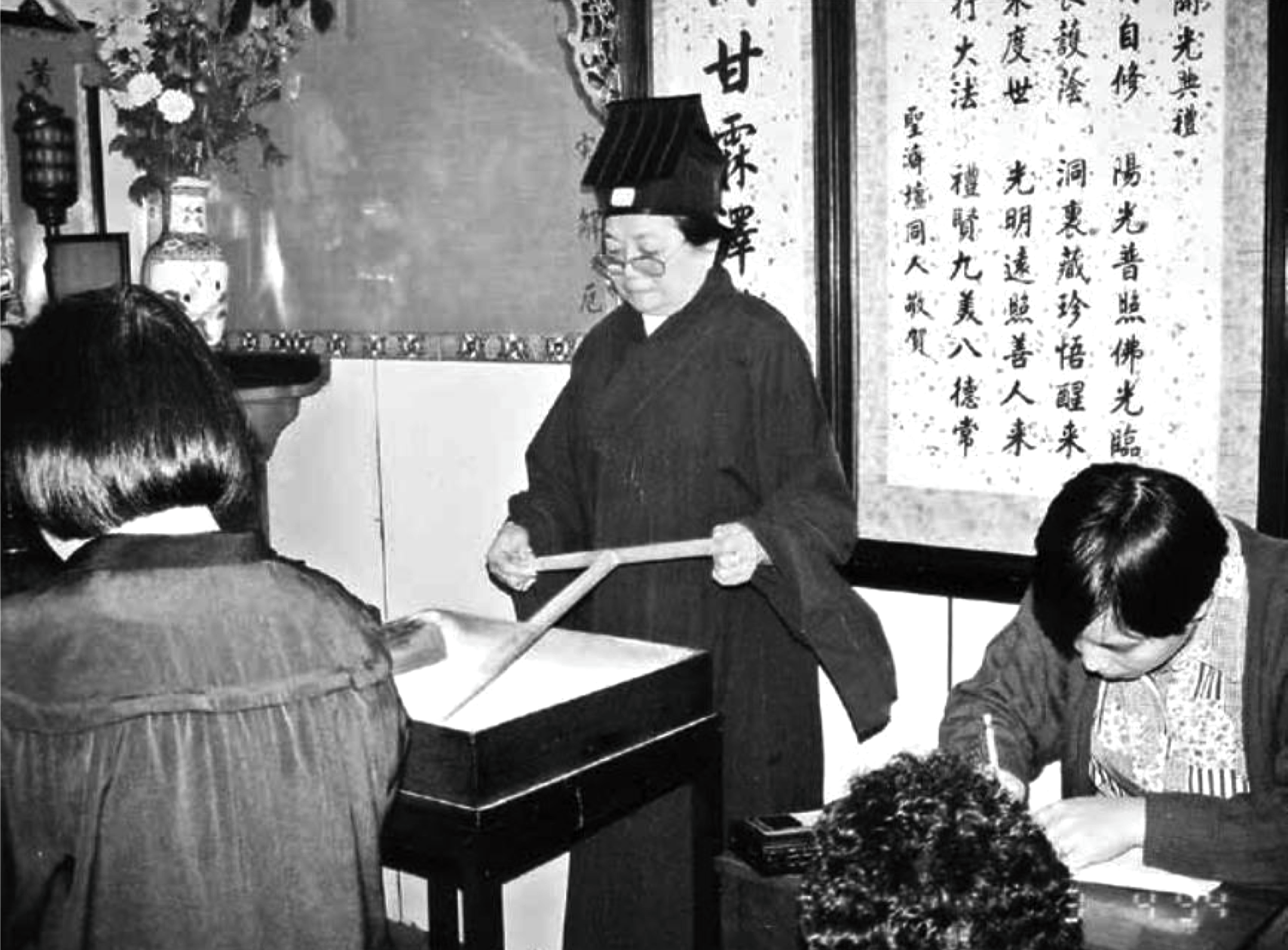
A typical fuji session involves roughly four stages. First, inviting the deity: incense is burned, spells are chanted, or talismanic paper is burned to issue an invitation. Second, writing: one or two operators hold the stylus and let its tip move across a sand tray, ash tray, or sheet of paper. Third, reading aloud: a companion recognizes and calls out each character as it appears. Fourth, recording: a separate scribe copies down the characters, producing a readable and preservable text.
This process means that a fuji text does not appear out of nowhere. It passes through bodily movement, on-the-spot recognition, transcription, compilation, and circulation. As sociologists Graeme Lang and Lars Ragvald observed in their 1998 study of the Wong Tai Sin cult, maintaining a fuji altar required considerable skill: the operators had to produce messages that sounded authentically divine — consistent in literary register, morally authoritative, and tailored to specific audiences — all while under the scrutiny of literate observers. Lang and Ragvald describe fuji as a form of shamanism following I.M. Lewis's model: a route to authority during social crisis, gentrified over centuries to avoid the dramatic trance of popular mediums and appeal instead to educated patrons. When cults scaled to mass worship, fortune-sticks (籤, qian) and professional fortune-tellers often replaced the fuji stylus because direct spirit-writing "is a difficult art."
Why the Literati Participated
Fuji does not belong solely to the "little tradition" of popular divination. From the Song dynasty onward, it became entangled with literati culture, Daoist ritual, poetry, and divine revelations. By the Ming and Qing periods, spirit-writing altars had proliferated across the empire, and the production of morality books (善書, shanshu) through fuji became a major cultural enterprise. Many local gentry members regarded fuji as a means of moral exhortation, social edification, and the restoration of communal order. It could be used to inquire about illness or personal affairs, but also to discuss self-cultivation, morality, disaster relief, and social crisis.
The scale of this literary production was immense. From the mid-nineteenth century onward, spirit-writing groups produced massive textual corpora. A prominent example is the Guandi (關帝) revelations that began at Longnüsi temple (龍女寺) in Wusheng, Sichuan around 1840. Responding to eschatological fears — the "apocalypse of the Gengzi year" (道光庚子) — Guandi, Wenchang, Guanyin, and other deities pleaded with the Jade Emperor to avert catastrophe. These revelations produced influential texts such as the Jiushengchuan (救生船, "Boat of Salvation," 1860), Fanxingtu (返性圖, "Illustrations of Returning to One's Nature," 1855), and Liaoranji (了然集, 1866). It was in these Guandi revelations of the 1840s that the influential moral framework of the Eight Virtues (八德) — filial piety (孝), brotherliness (弟), loyalty (忠), trustworthiness (信), ritual propriety (禮), justice (義), honesty (廉), and sense of shame (恥) — was first systematically formulated.
This is why fuji became so significant in modern China. During the late Qing and Republican periods, social upheaval, warfare, and the collision of old and new ideas left many feeling that the traditional order was collapsing. Fuji offered a language: through written characters, deities reminded people to cultivate themselves, perform good deeds, provide disaster relief, and rebuild communal life. It was at once ancient and capable of entering the modern world of publishing, civic associations, and philanthropic organizations. In Shanghai alone, the number of charitable organizations grew from roughly 40 before 1911 to 118 by 1930, and many of these — including the influential Zhongguo Jishenghui (中國濟生會), which collected over 200,000 dollars for relief in 1917 — were deeply embedded in spirit-writing culture.
Why Daoyuan Valued Fuji
Daoyuan's fuji practice was not an isolated "mystical ritual." It was bound up with the organization's core objectives: promoting morality, conducting charitable work, and urging people toward self-cultivation. Daoyuan documents repeatedly stress that faith is not equivalent to superstition. As historian Li Guangwei demonstrated in his 2009 study, Daoyuan texts from the 1920s and 1930s drew an explicit distinction: "faith" (信仰) was rational inquiry into truth, whereas "superstition" (迷信) was blind following and the mere seeking of personal blessings. One Zouping Daoyuan instruction text from 1935 put it bluntly: "To run westward to burn incense at a temple, eastward to make offerings at another, vainly hoping for divine protection — this is nothing but superstition" (徒知西廟去燒香,東廟去上供,妄冀神靈之保佑,這不過是一種迷信罷了).
This point is crucial. During the Republican period, fuji was frequently targeted by anti-superstition campaigns. But the internal Daoyuan argument, as articulated by figures such as Hou Sushuang (侯素爽) in a 1923 exchange with the missionary Medhurst and the Christian scholar Zhang Chunyi (張純一), ran as follows: there are certainly many unreliable spirit-writing altars, but one should not dismiss them all — what matters is whether the Dao they teach is proper, not whether they use fuji as a method (但當論其道不道,不當論其乩不乩). If fuji is used for moral edification, exhortation to goodness, and the promotion of public charity, it cannot simply be equated with superstition. For the general reader, Daoyuan's fuji can be understood as a "text-generating religious technology" and simultaneously as a method of organizational mobilization and moral education.
Li Guangwei further notes several distinctive features of Daoyuan's fuji culture. Unlike some secret societies, Daoyuan did not use fuji to mystify its leaders — the organization explicitly opposed the deification of living figures. Deities could even change their plans based on members' democratic input: when the supreme deity Zhisheng Xiantian Laozu (至聖先天老祖) proposed Shanghai as the venue for a major "Twelve-Year Dao Establishment Conference" in 1932, members objected, and the venue was changed to Jinan. This combination of divine authority and consultative governance was unusual and reflected Daoyuan's conscious effort to position itself within modern organizational norms.
How to Understand Fuji Today
Today, we need neither romanticize fuji nor reduce it to fraud. A more fitting approach is to place it back in its historical context: it connected ritual, writing, publishing, charity, and community organization across more than a millennium of Chinese history — from a concubine's spirit invoked through a kitchen sieve in the fifth century, to literati altars producing scripture in the Song and Ming, to redemptive societies mobilizing disaster relief in the Republican era. The texts Daoyuan left behind are not ordinary essays — they are historical materials that took shape step by step, moving from the spirit altar through editing, printing, and circulation.
For more visual contemporary materials, browse this online exhibition on flying-phoenix culture: Flying Phoenix: Taiwan Flying Phoenix Culture Exhibition. You may also watch this video on flying-phoenix cultural exchange: YouTube.