The Spirit-Writing Publications of Daoyuan (道院)
Daoyuan's spirit-writing (扶乩, fuji) did not only take place at the altar. What gave it a lasting historical impact was the fact that the texts produced through fuji were recorded, compiled, edited, printed, and circulated. In other words, Daoyuan did not merely "invite deities to write characters" — it transformed spirit-altar writing into published works. This transformation from ritual event to printed object is perhaps the single most important thing to understand about Daoyuan's textual legacy: every document in this archive is not a raw transcript but a text that has traveled through a chain of mediation.
From Sand Tray to Printed Page
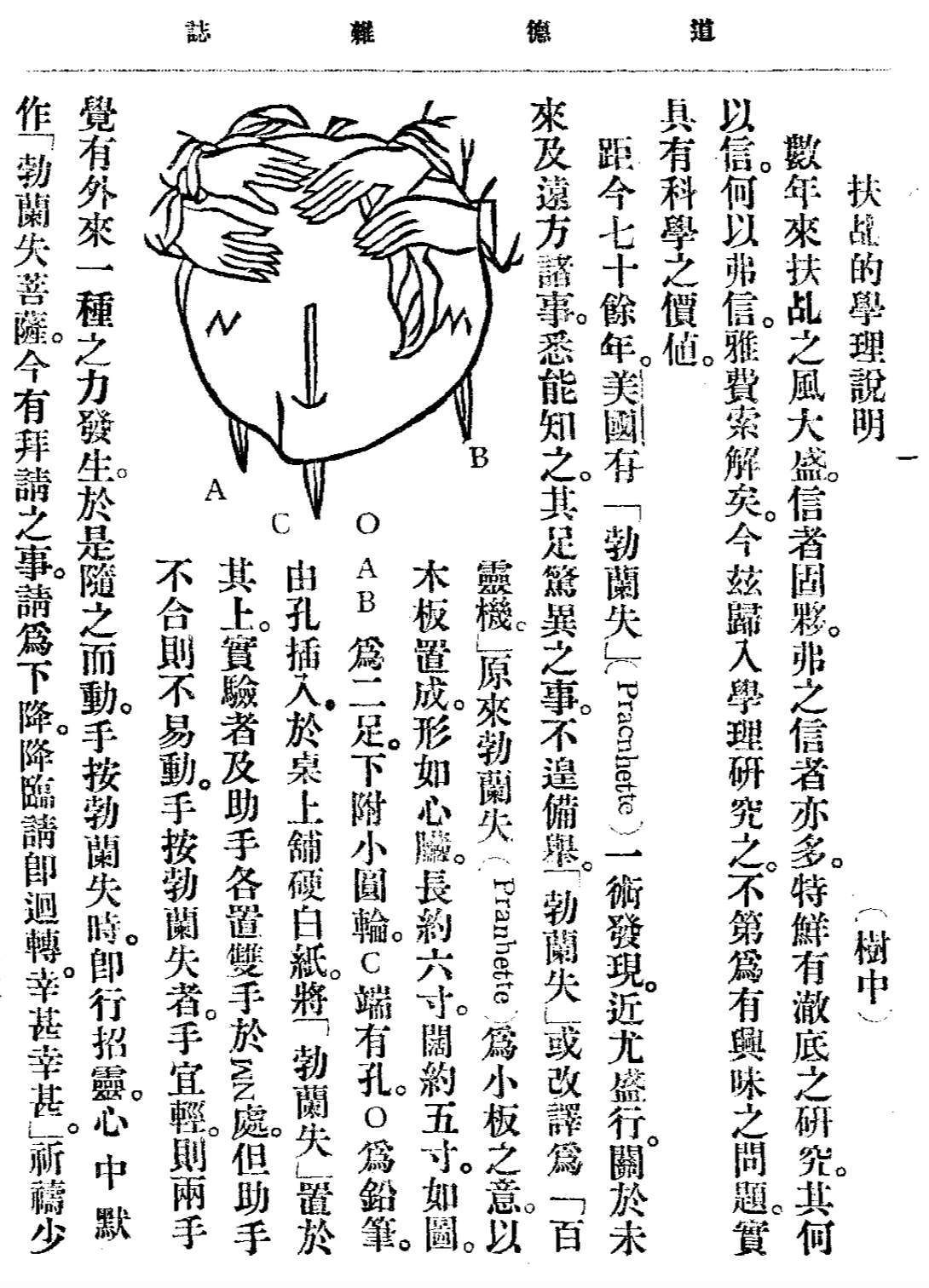
When a fuji session produces text, there are typically operators holding the stylus, a caller reading the characters aloud, and a scribe making the record. After each character is written, the sand tray may be smoothed over so the next character can appear. What survives is not the sand tray itself, but the text that the scribe wrote down. This means that a fuji text is inherently mediated: divine revelation, stylus movement, character recognition, transcription, compilation, editing, typesetting. The Daoyuan publications we see today are generally not the raw on-the-spot script but texts that have passed through an editorial process.
This is not unique to Daoyuan. The transformation of spirit-writing into organized publishing has a long history. By the late imperial period, the production of morality books (善書, shanshu) through fuji had become a major cultural industry. In the mid-nineteenth century, the Guandi revelations at Longnüsi temple in Sichuan produced serial texts — the Jiushengchuan (救生船, 1860), Fanxingtu (返性圖, 1855), Liaoranji (了然集, 1866) — that circulated widely and spawned imitations. The most important of the late imperial spirit-writing canons, the Daozang jiyao (道藏輯要), was substantially shaped by fuji revelations. By the time Daoyuan began publishing in the 1920s, there was nothing novel about printing spirit-written texts. What was new was the organizational scale, the periodical format, and the deliberate use of publishing as a strategy of public legitimation.
Why Daoyuan Valued Publishing
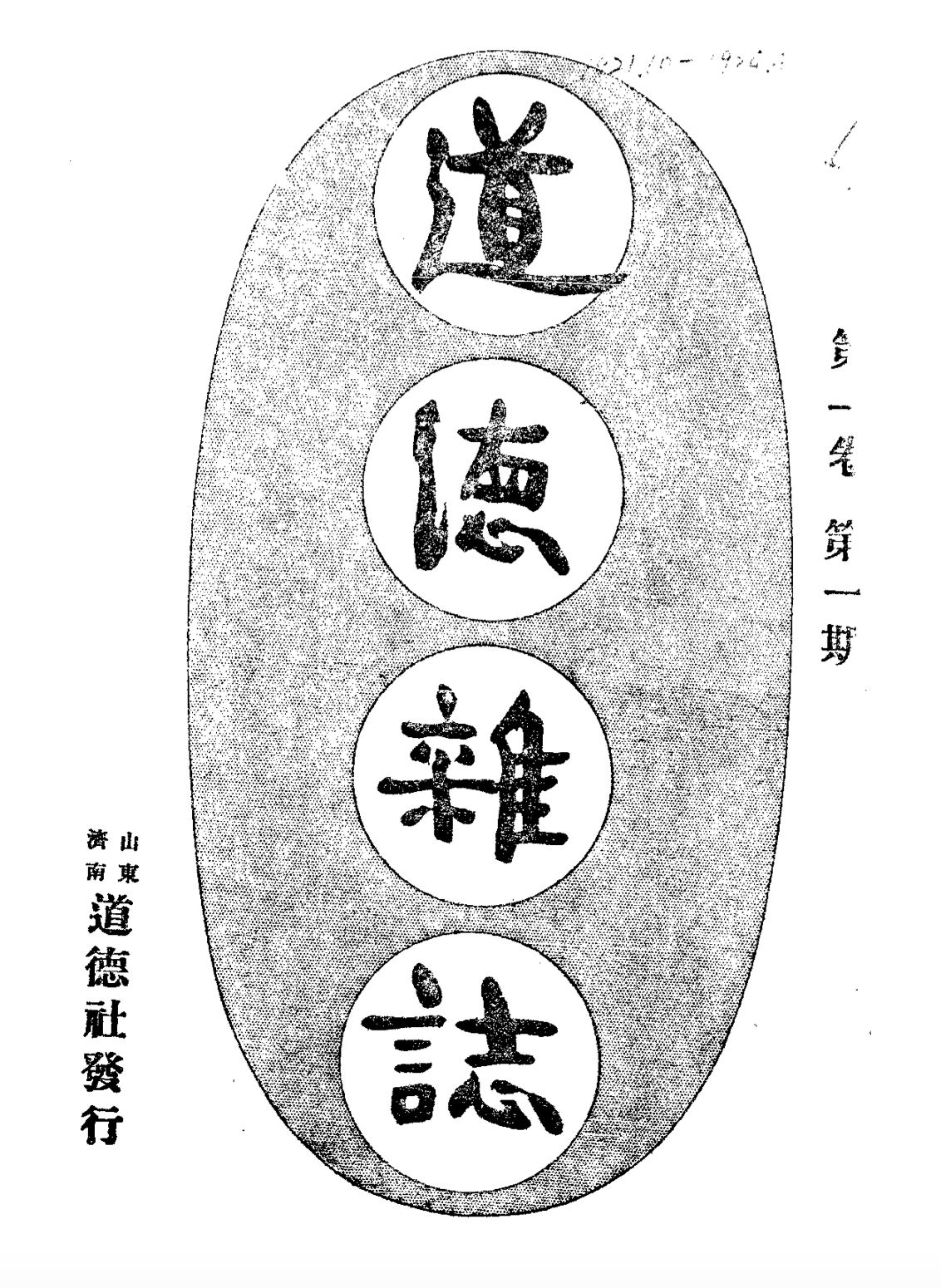
In the early Republic, religious organizations could more openly run periodicals, establish branches, recruit members, and disseminate ideas. Daoyuan took full advantage of this space. Daoyuan Huowen (道院或問), the 1927 institutional catechism, states directly that if one wants to see the principles Daoyuan has expounded and the charitable works it has carried out, one may consult Daode Magazine and Zhebao (哲報). This is more than a bibliographical note — it is a statement of strategy. Publications were the public-facing surface of an organization that also sustained an inner life of altars, meditation, and revealed scripture.
The catechism also notes that Daoyuan produced its own scriptures through fuji, notably the Taiyi Beiji Zhenjing (太乙北極真經) and Taiyi Zhengjing Wuji (太乙正經午集). These were not marketed as the personal views of Daoyuan's leaders but as revealed texts — a claim that positioned the organization within a long tradition of scriptural production through spirit-writing while also exposing it to skepticism from both secular modernizers and orthodox religious authorities.
Divine Instructions, Morality Books, and Periodicals
Several types of text commonly appear in Daoyuan publications. The first is divine instructions (訓文, xunwen) — sacred teachings produced through fuji. These are the core genre: a deity speaks, often in classical or semi-classical Chinese, and delivers moral exhortation, doctrinal exposition, or practical guidance. The second is morality books or exhortatory texts, explaining the significance of self-cultivation, good deeds, and charity. The third is organizational news, covering conferences, branch activities, charitable operations, and personnel matters. The fourth is topical articles that use relatively modern language to explain fuji, religion, morality, and social issues — these were often directed at skeptical outsiders and constituted a form of public apologetics.
These genres often appear mixed together. A single volume or issue may contain divine instructions, editorial notes, organizational records, and fundraising appeals all at once. Daoyuan's publishing world is therefore both religious text and institutional archive simultaneously — and reading it well requires recognizing which genre a given passage belongs to.
Wujiao Tongyuan (五教同源): The Five Teachings in Print
Wujiao Tongyuan ("The Five Teachings Share a Single Source") is one of the most important Daoyuan-related texts preserved in the archive. It is not a single-author treatise but a compiled anthology: the editors selected divine instructions and commentaries on the themes of "five teachings, one source" and "the great way is a single root" (大道一本) from Daoyuan-related publications and assembled them into a text suitable for reading and moral edification.
The surviving passages give a vivid sense of the book's scope. In one revelation from the Nanjing Daoyuan in 1937, the Prophet Mohammed (謨祖) expounds Islamic theology in classical Chinese, discussing the concept of qi (炁) and citing the Quran (可蘭), arguing that the Dao manifested itself through Islam and that the path to union with the Dao lies through self-purification. In another, Mohammed calls for unity across religions: "Pure Truth is supreme; one sincerity moves Mysterious Heaven; the various teachings are not different; great completion returns to wondrous peak" (清真本至上,一誠感玄天,諸教無分別,大成返妙巔).
Jesus (耶祖) appears in multiple revelations. In one from the Nanjing Daoyuan in 1927, he states: "I was first born in a stable. Later, to save the world, I sacrificed my body on the cross" — a compressed Christian creed rendered in Chinese idiom. In other revelations from Anqing and Wuchang, Jesus emphasizes that all religions are fundamentally one family (教本一家), anchored in the single word "goodness" (善), and criticizes Western militarism: "Prussia, France, Germany, Austria — war without end" (普法德奧,戰爭無了時). He also articulates a theory of reincarnation across religious boundaries: "Islam, Christianity, Confucianism, Buddhism, Daoism — all are transformations of one spirit" (回基儒釋道,皆一靈所化).
These passages reveal the central ambition of the Wujiao Tongyuan project: to demonstrate, through the voices of each religion's founder, that sectarian divisions are superficial and that all genuine religious traditions converge on a single moral and metaphysical truth. For twenty-first-century readers, the spectacle of Jesus and Mohammed speaking through a Chinese spirit-writing stylus about interfaith unity is arresting — but for Daoyuan's editors and readers, it was the natural extension of the claim that the Five Teachings share one source.
Images Could Also Be Produced Through Spirit-Writing
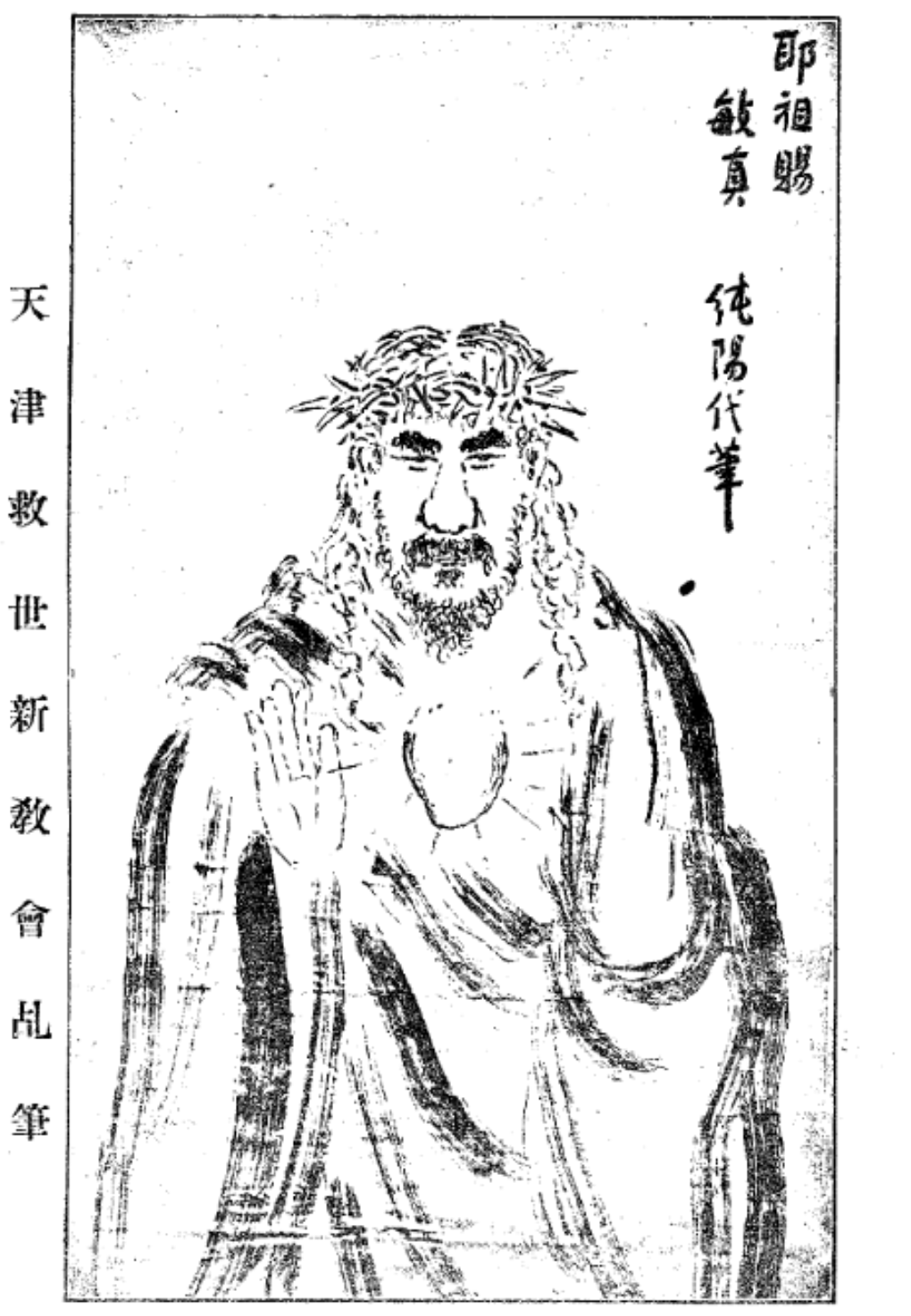
Fuji did not necessarily produce only text. On some occasions it also produced images, such as divine portraits or sacred icons. The Jesus image reproduced here was generated during a fuji session — a material trace of the same process that produced the textual revelations. These images passed through the same chain of mediation as the texts: on-site generation, recognition, preservation, and circulation. They remind us that Daoyuan's material culture included not only books but also styluses, altars, certificates, photographs, images, and organizational charts.
Reading Daoyuan's Publications as Historical Evidence
Daoyuan's publications are more than vessels for doctrine. If we read them as historical evidence, each text carries metadata even when it is not explicitly stated. Which altar or publication did it come from? Was it produced through spirit-writing, or is it an editorial composition? Was it edited between the altar and the printing press? Where was it printed, and for which audience? Which branch, person, or charitable activity is it connected to? Does it cite other publications, and if so, which ones?
Answering these questions turns a collection of scanned pages into a research corpus. A reader can move from a page image to its transcription, and from there to the institutional context that produced it. A single divine instruction from the Nanjing Daoyuan in 1937 is not just a theological statement — it is a datapoint about a branch operating under Japanese occupation, still producing revelations, still circulating texts, still claiming the unity of religions in a time of war. Daoyuan's publications, when read with attention to these layers, become a window into the lived history of a religious movement navigating one of the most turbulent periods in modern Chinese history.